Summer Vibes
Refreshers
The astute observer may have noticed a 100% change in the style and look of this site. This is intentional. I’ve been messing with vibe-designing a new look for the blog, and investigating how I can naturally embed some more interesting visualizations centered around space and the universe into my corner of the web here.
It is worth noting that all of the words, photography, and posts on the site will remain my own (no AI writing here, this is artisanal blogging). I plan to use AI tools only to create animations/interactive visuals, and for website formatting.
Hello World
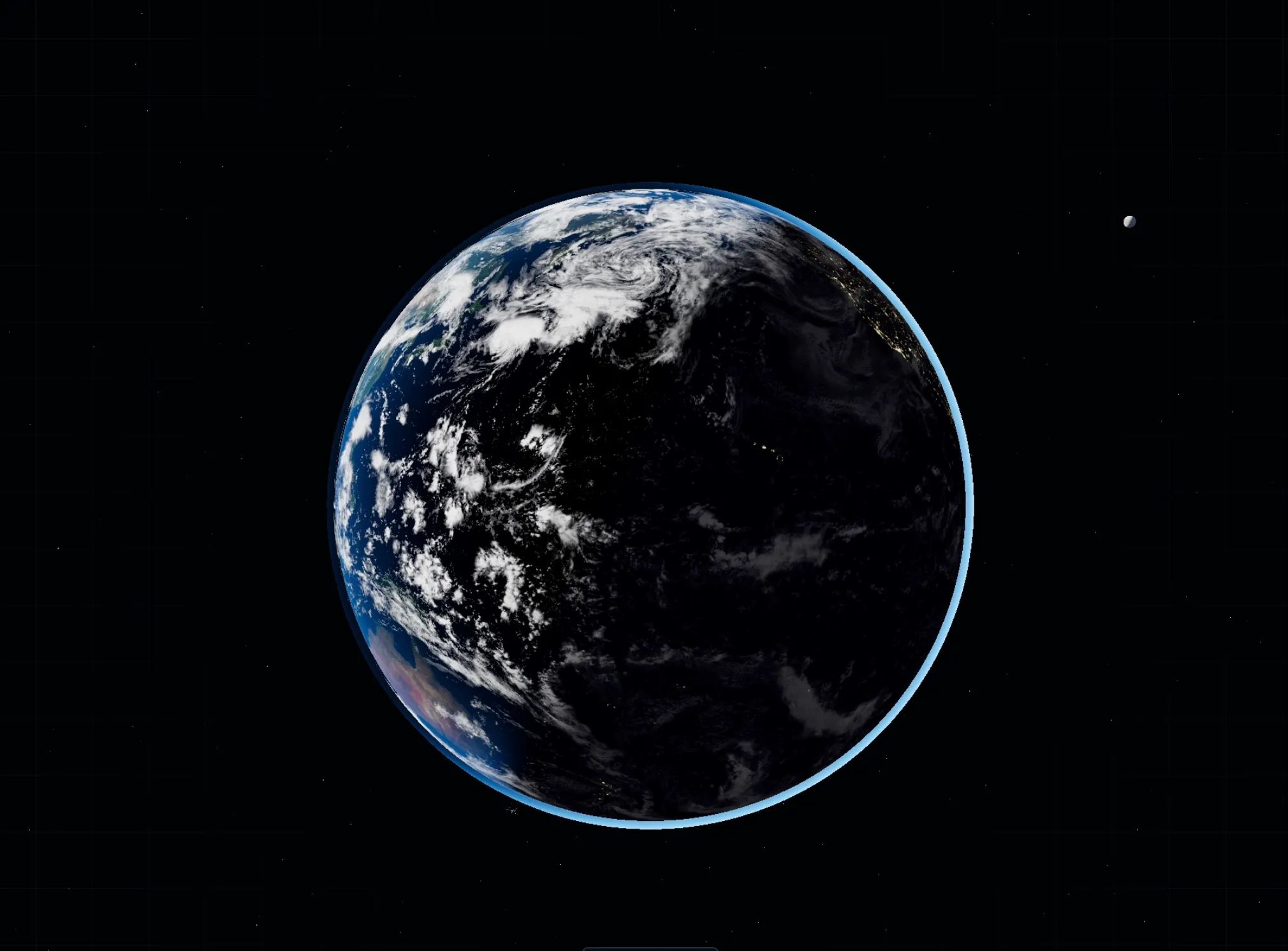
The first animation/interactive project I’ve been noodling on in my (limited) free time is a simple Earth + moon + ISS visual that uses publicly available NASA imagery and resources. I wanted to capture some high quality earth imagery and cloud/atmosphere effects, as well as high quality moon imagery with satisfying lighting.
The earth imagery that is projected onto the three.js sphere model is courtesy of a pretty cool NASA project series called Blue Marble, that collects high-res topography images from Earth observation satellites. The moon imagery projected onto the moon sphere comes from the NASA Scientific Visualization Studio, which stitched together Lunar Reconaissance Orbiter imagery (which is very high quality, and really cool) into this large map. The resources we get from public observatory spacecraft are incredible.
To make things a bit more interesting, I also included an ISS model (ephemeris fetched from Celestrak):
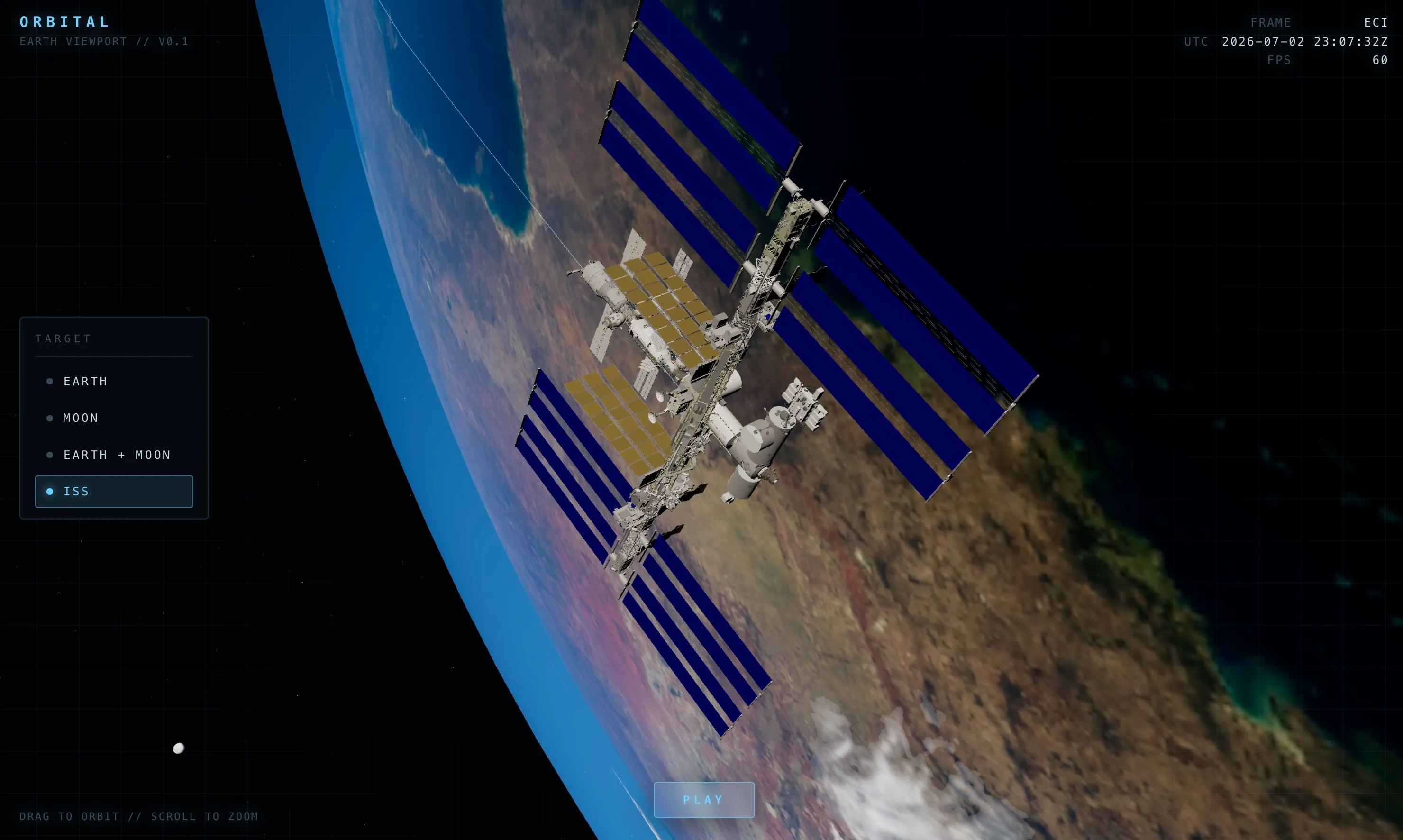
The 3D model is, of course, courtesy of NASA - they provide high-res models like this one in a custom format with textures included. To make this usable on web, I had claude-code convert the model into .glb format via assimp and strip out the actual texture images themselves. In lieu of real texture images, we just have different colors with somewhat appropriate reflectivity for the solar arrays and the radiators. Including all of the textures would be pretty heavy, and likely slow things down and create a laggy user experience.
I love looking at visualizations of spacecraft as they orbit around the Earth. This is by far the most intuitive way to understand how something actually flies (and subsequently, design new ways for something to fly). I’ve worked on tools that do this in a professional capacity, so it is fun to do this in a lower-stakes environment where I can focus more on pretty earth imagery and radiator colors. The ISS attitude guidance here is just a simple Local-Vertical-Local-Horizontal model that keeps the main truss perpendicular to velocity. I have no model for solar array actuation and sun-tracking - these would be interesting to add as sliders or inputs in the future (surely we can crowd-source attitude guidance!).
Feel free to rotate the Earth model, click around to zoom on the moon and zoom out to the Earth/moon system, and check out the night-time city lights in the Earth model. There is a simple atmosphere layer as well, which adds a little bit of glow around the perimeter of the Earth. The relative geometry of the Earth, sun, and moon are reasonably accurate here - I’m using a pretty first-order set of simple trig formulas to get the sun and moon positions for a given UTC time. These are accurate to less than 0.1deg typically (notably, this is not accurate enough to accurately predict where a solar eclipse will fall on the Earth, don’t ask me how I know this).
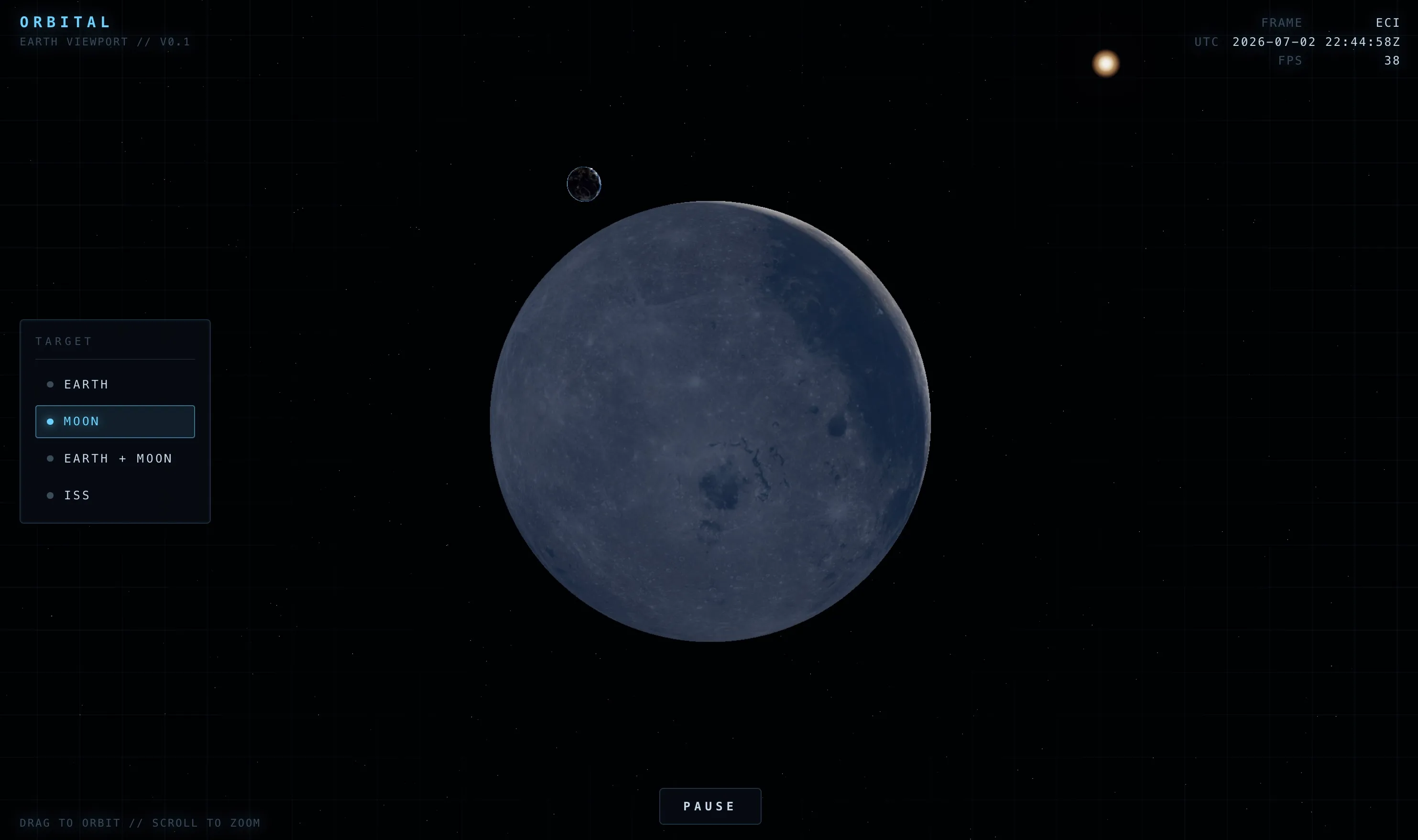
Getting the light from the sun to show a crescent on the moon and Earth from this perspective is super cool. It is fun to rotate things around and see how perspective shifts, one day it will be even cooler to take a camera on a starship and get these views for real.
Coming Attractions
Overall I am pretty happy with the new visual look of the site, and the Earth system animation. It has been fun to tweak pretty visuals on the ISS, and I’m excited to have a way to easily insert more complicated content into the blog.
I have more photos to process and write about too - the next one is likely from a Tulip festival we went to nearby, although I have some cherry blossom pictures I have yet to post as well. I’m hoping to actually do more astro again this summer, so fingers crossed on weather and locations working out!